
Cardinal ribcage breathing (a 360° breath) activates slow-adapting stretch receptors, creating space and reducing sympathetic tone. The resistance band adds tactile feedback to help you sense ribcage expansion and recoil.
When Sensations Turn Up: Interoception and Anxiety
Anxiety is a sensation many people have experienced—whether they realize it or not. It can feel like your body is speaking louder than usual. You might notice a fluttery stomach, buzzing muscles, tight ribs, or shallow breathing. Your chest may feel crowded or tense, and your heartbeat can feel like a loud drum. At times, it may seem like your body is sending “unsafe” signals, even when you are physically safe in the moment.
For people who have lived through overwhelming or traumatic experiences, the body can hold onto traces of those moments long after life has moved on. Trauma responses can continue to activate on their own, driven by self-reinforcing loops in the brain and nervous system. That may sound complicated—so let’s break down what is happening in a simple way.
To understand this, we first need to talk about interoception. Interoception is your awareness of your body’s internal signals. For example, when you feel pressure in your bladder, you know it’s time to use the bathroom. When you feel thirsty, you look for water. When you feel scared, your body may prepare to fight, freeze, or run.
To feel safe and regulated, the brain is often scanning for answers to three basic questions:
What do I feel?
Am I connected to my environment?
What does this situation mean for me?
We’ll examine how interoception follows three main steps: sensation, interpretation, and action.
Sensation begins in the body and brain through the senses—such as sight, hearing, balance, smell, and taste. These systems notice what is happening around you and send that information to the brain.
Next comes processing and interpretation. One important brain area involved is the dorsal posterior insula, which helps you sense what is happening inside your body and connect those sensations to emotions. The vagus nerve plays an important role here. In people with a history of trauma, this area can become less active during dissociation. The good news is that gentle, intentional practices can help re-engage this part of the brain over time.
From there, the brain prepares for action by sending information to the mid insula, where signals related to taste, smell, and balance are organized and combined.
Finally, the anterior insula helps interpret social and emotional meaning. It helps you understand facial expressions, body language, tone of voice, and movement. This step supports social safety and helps the nervous system stay regulated.
Culture also influences how sensation, interpretation, and action work together. Because people grow up learning different meanings and social cues, misunderstandings between individuals—or even whole groups—can happen. We often see this play out in public and political spaces.
Anxiety often (though not always) becomes a cycle when body sensations do not match a person’s sense of safety.
For example, imagine someone sitting alone in a quiet room. They have a history of relational or developmental trauma and little experience with therapy or somatic practices. With fewer outside distractions, subtle sensations—like throat clenching or chest tightness—become louder and harder to ignore.
Suddenly, they notice a quick movement in the corner of their eye. The brain quickly predicts, something bad is happening, and I’m trapped. The nervous system does not need a clear memory of past harm. It only senses that this moment feels similar to earlier threats, so it decides danger is present.
In response, the throat tightens more, the chest constricts, and the body becomes more alert. These stronger sensations are then interpreted as proof that the brain was right. The system convinces itself that danger is real, and anxiety continues to build.
This is one example of disembodiment. It is often linked with disrupted hunger signals, muted or mismatched sensory awareness, and emotional numbing.
The vestibular system also plays an important role here. This system helps the body understand balance, movement, and where you are in space. It works closely with interoception to help the brain feel oriented and safe. When someone has a history of trauma, the vestibular system may compensate by becoming overly alert to movement or by shutting down awareness of motion. This can make body sensations feel confusing, overwhelming, or disconnected—even in safe situations.
When the vestibular system is compensating, people often experience tension or pain in the shoulders, mid-back, low back, hips, hamstrings, calves, or feet. This happens because the body stays in a tense, flexed posture, ready for fight or flight—even when there is no real threat. Over time, gentle movement and grounding practices can help restore balance, support interoception, and help the nervous system feel safer in the body again.
Note that the body’s interoceptive processing and attunement can be influenced by life factors such as traumatic brain injuries, viral infections, autoimmune conditions, hydration status, hormone levels, and medications.
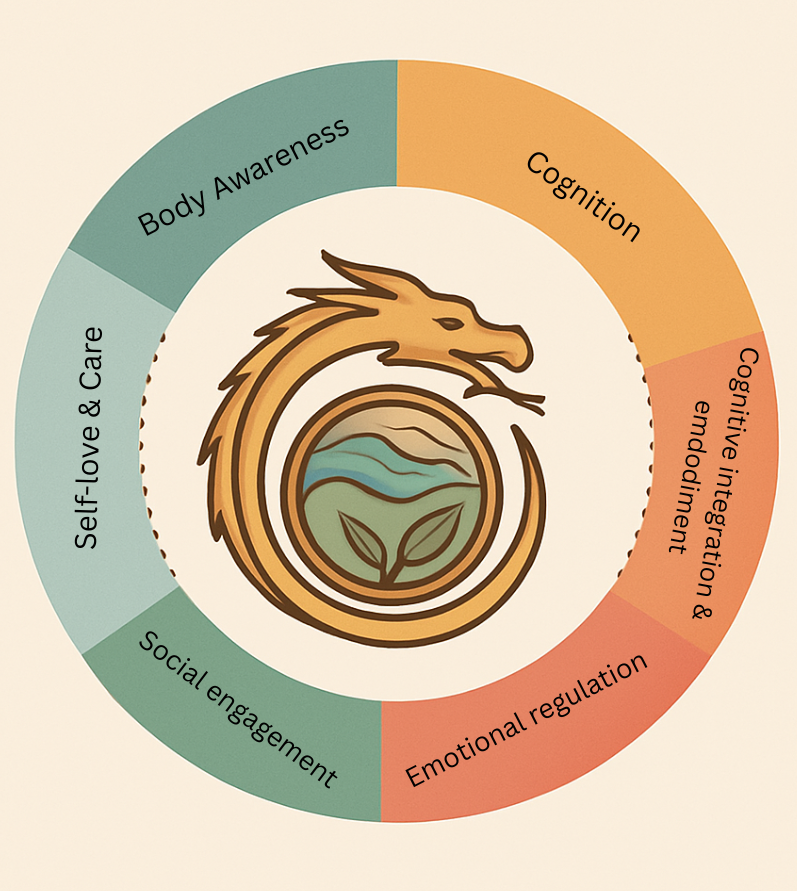
Pictured above: Interoception can be grouped into clear categories that help us notice, understand, and practice body-based awareness. See chart below.
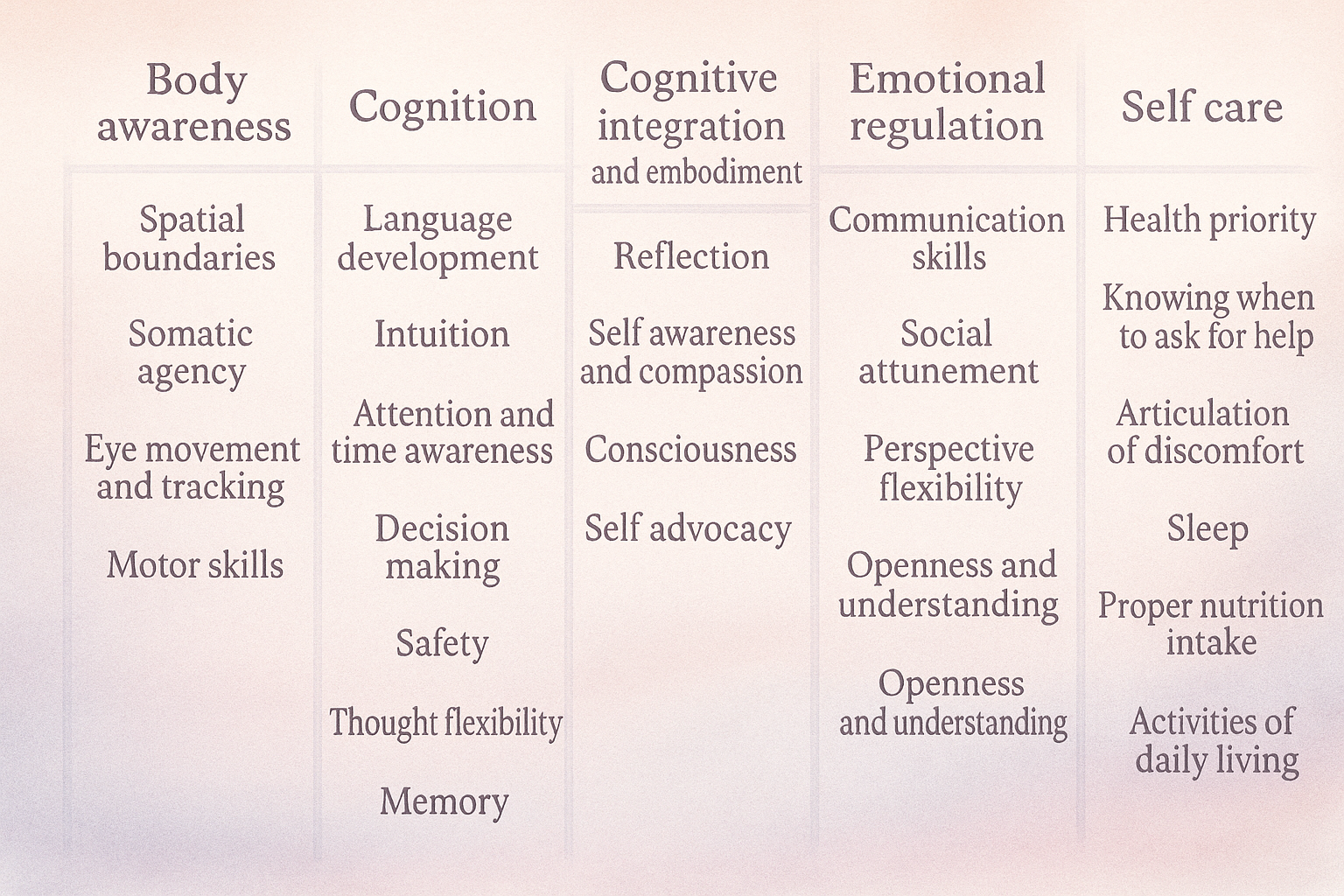
For your reflection: Above are various interoceptive categories that expand beyond sensation.
Moving toward regulation
So how can we begin to guide the nervous system away from an anxiety-provoking state? Often, anxiety is the body saying, “I need clearer, more reliable information.”
When the brain is constantly sending threat signals, the body can feel overwhelmed by sensations like dizziness, pain, tightness, or shortness of breath. These sensations are not dangerous, but without support, they can easily be misread as signs of danger.
One gentle, reliable way to support the nervous system is through the breath, which can activate the calming effects of the vagus nerve. When interoceptive sensations feel too intense, using an external object to give the body feedback can be especially helpful. For example, placing a stretchy resistance band around the ribcage while breathing allows you to feel the ribs gently expand into the band and the band push back into the body.
This back-and-forth pressure activates stretch receptors in the ribcage, which helps signal safety to the nervous system. The breath should feel comfortable, smooth, and unforced. Lengthening the exhale slightly longer than the inhale can further support calming. (Example: Inhale while mentally counting 1-2-3, and exhale on a count of 4-3-2-1). This practice is great to do in a car before a big meeting, during breaks or after work on the couch to relax before dinner to “melt the day away” (and support digestion) as a dedicated wind-down ritual.
Letting your body know you will practice for a few minutes in a space you recognize as safe—and choosing a seated, standing, or lying position that feels supportive—can make the practice feel more settling and effective.
Anxiety is often not a sign that something is wrong, but a signal that the nervous system is working hard to protect you. When we begin to understand how the body senses, interprets, and responds to the world, anxiety can be met with curiosity instead of fear. Rebuilding a sense of safety happens gradually, through small moments of awareness, movement, and support. Over time, this allows the brain and body to communicate more clearly—and safety can be felt, not just understood.
This writing is for educational purposes only and is not a substitute for personalized medical advice.
References
Clinic, C. (2025, February 19). Interoception: Definition, Symptoms & How To Improve. Cleveland Clinic. https://my.clevelandclinic.org/health/articles/interoception
Zoellner, L. A., & Craske, M. G. (1999). Interoceptive accuracy and panic. Behaviour research and therapy, 37(12), 1141–1158. https://doi.org/10.1016/s0005-7967(98)00202-2